

Rio 2016 Bid - Deodoro Cluster
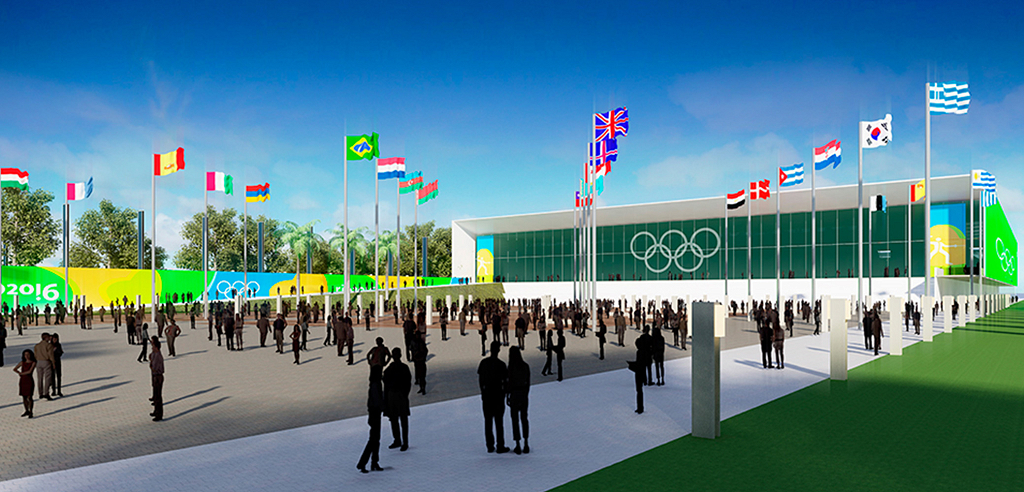
Rio de Janeiro, RJ, Brazil 2008-2009The practice was responsible for the preliminary studies (architecture and landscape design) of most of the new venues and facilities to be built for the Olympic Games, working closely with the Rio 2016 Organizing Committee team and its international consultants EKS/JBD (responsible for the Games Overlay and Operational Planning), in accordance with their briefings and pre-requisites. BCMF acted as the lead designer of 17 new venues and facilities, as well as the complementation of 3 existing ones, located mainly in the Barra da Tijuca and Deodoro clusters — where the architects had previously designed the Deodoro Sports Complex for the Rio 2007 Pan-American Games. In addition, the practice also provided design support to the Rio 2016 team in the development of temporary structures and was responsible for producing most of the imagery for the Olympic Dossier. As pre-defined by the COB (Brazilian Olympic Committee), the facilities for the Rio 2016 Olympic Games were grouped into four major and distinct areas of the city, interconnected by an efficient transportation system: Barra da Tijuca, Copacabana, Maracanã, and Deodoro.This strategy was intended to distribute the direct and indirect benefits of the Games among all the inhabitants of Rio de Janeiro, through the construction of new facilities and infrastructure, as well as improvements to the existing network. While the Copacabana cluster would primarily host temporary structures, the Maracanã and Deodoro clusters would have their existing venues complemented, and Barra da Tijuca would concentrate the majority of the new venues and facilities to be built or adapted.







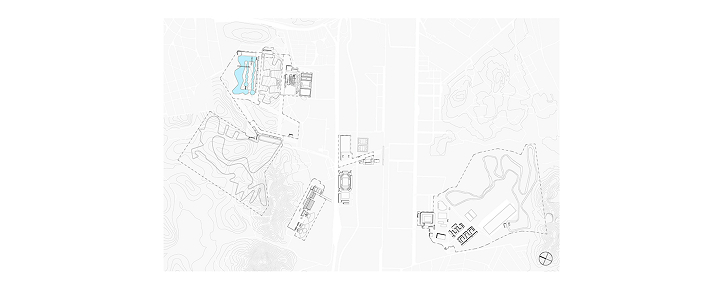
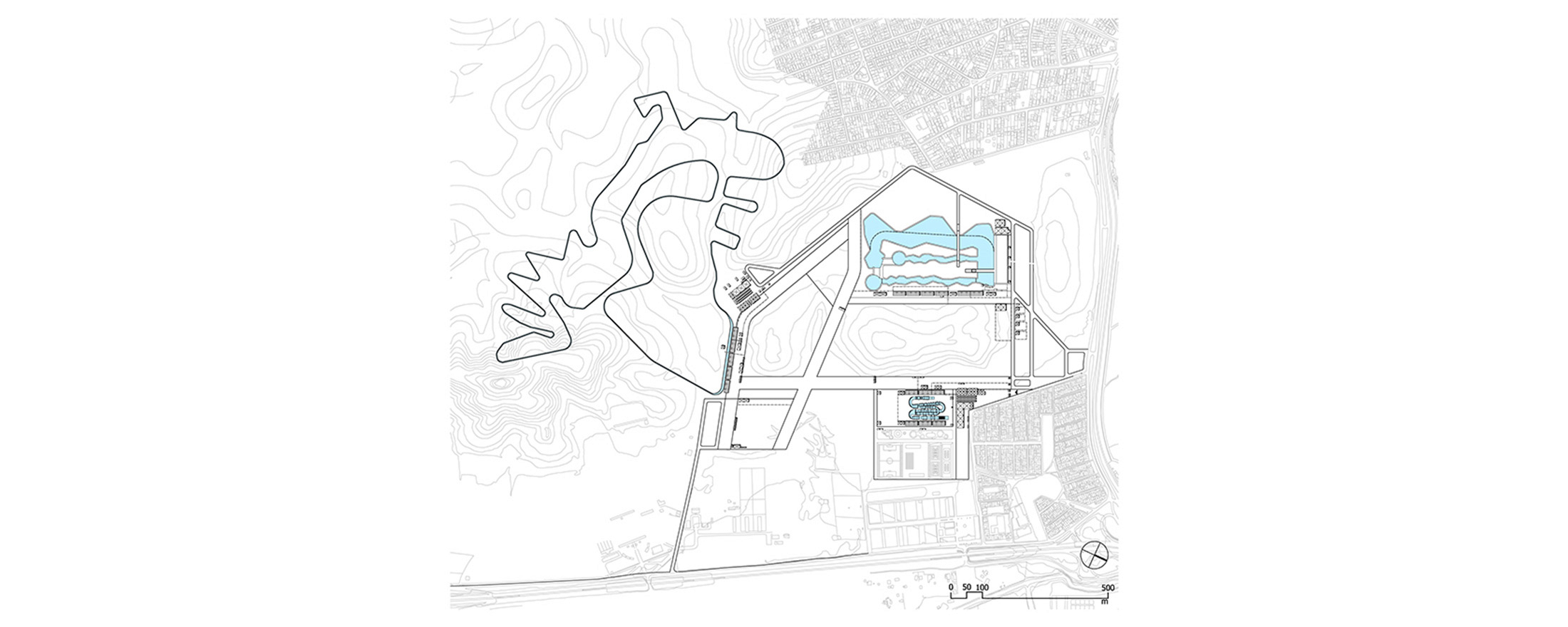

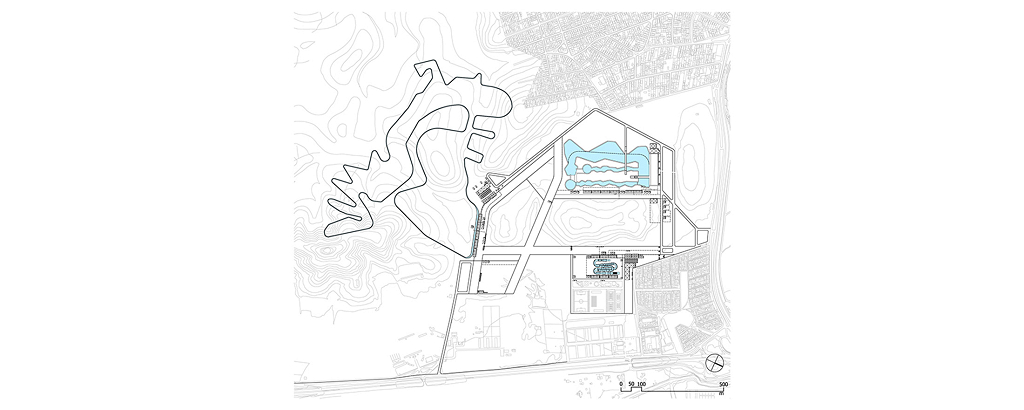



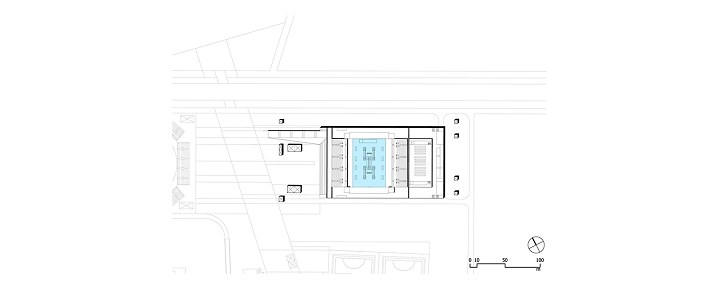
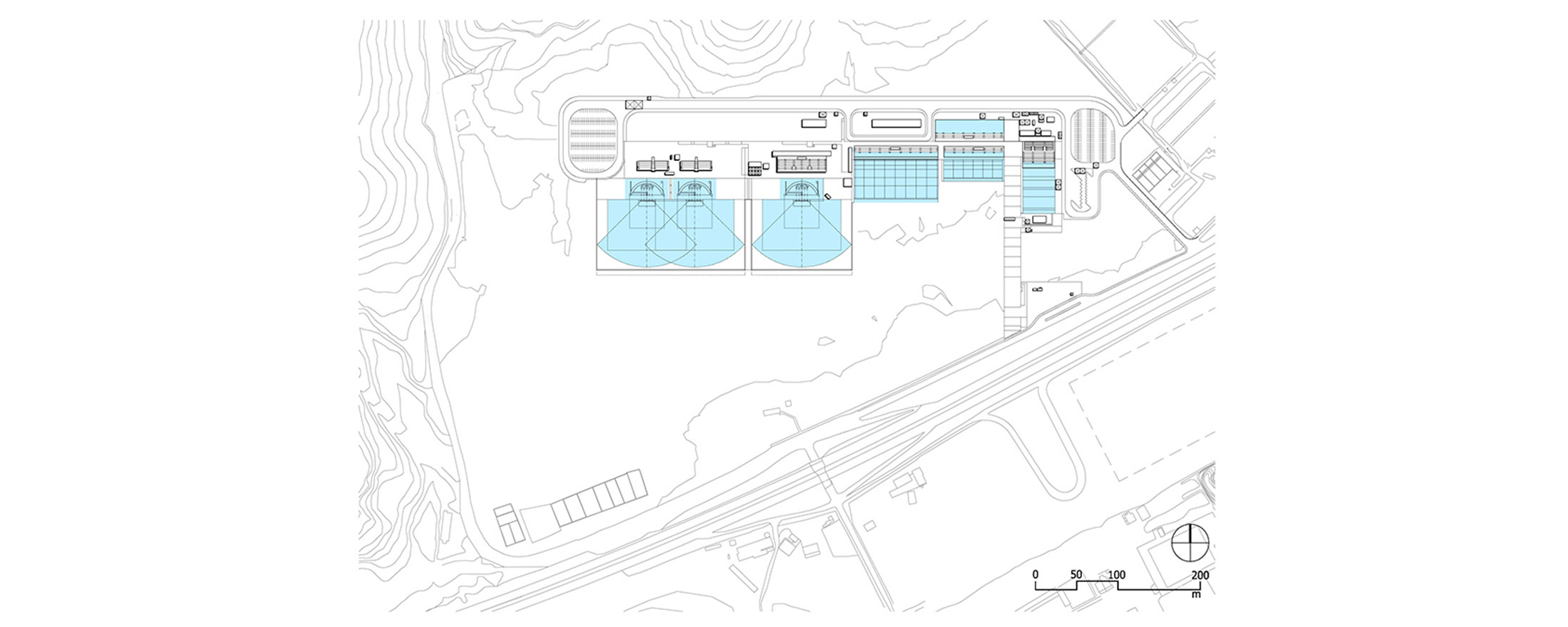

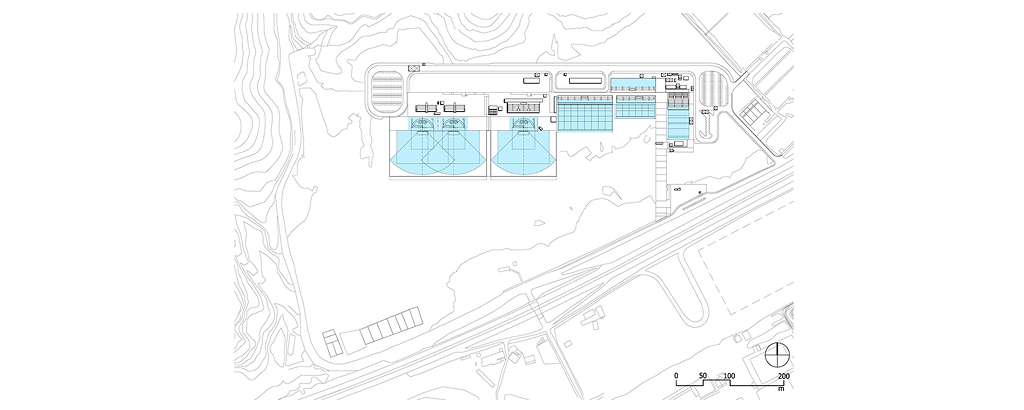
DEODORO CLUSTER
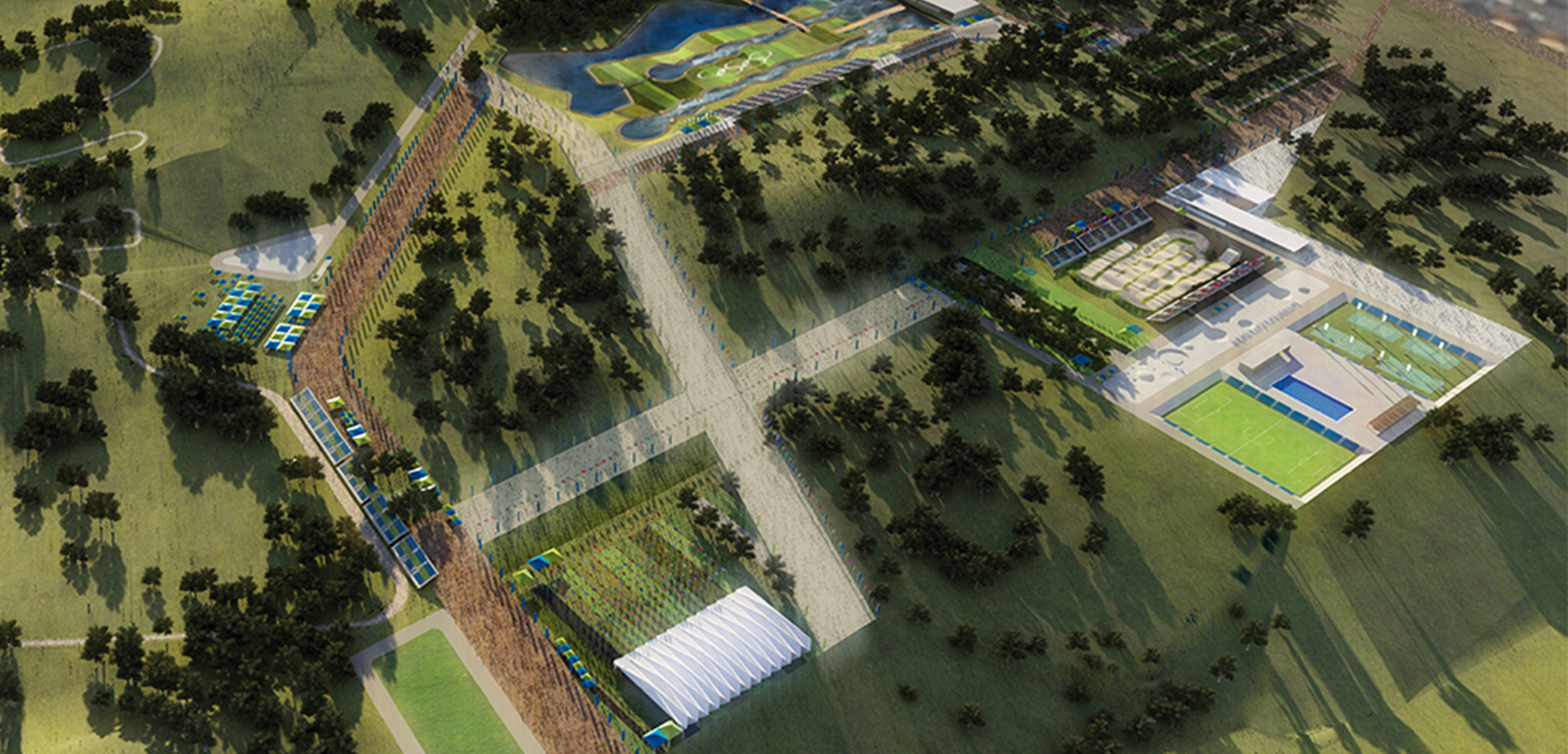
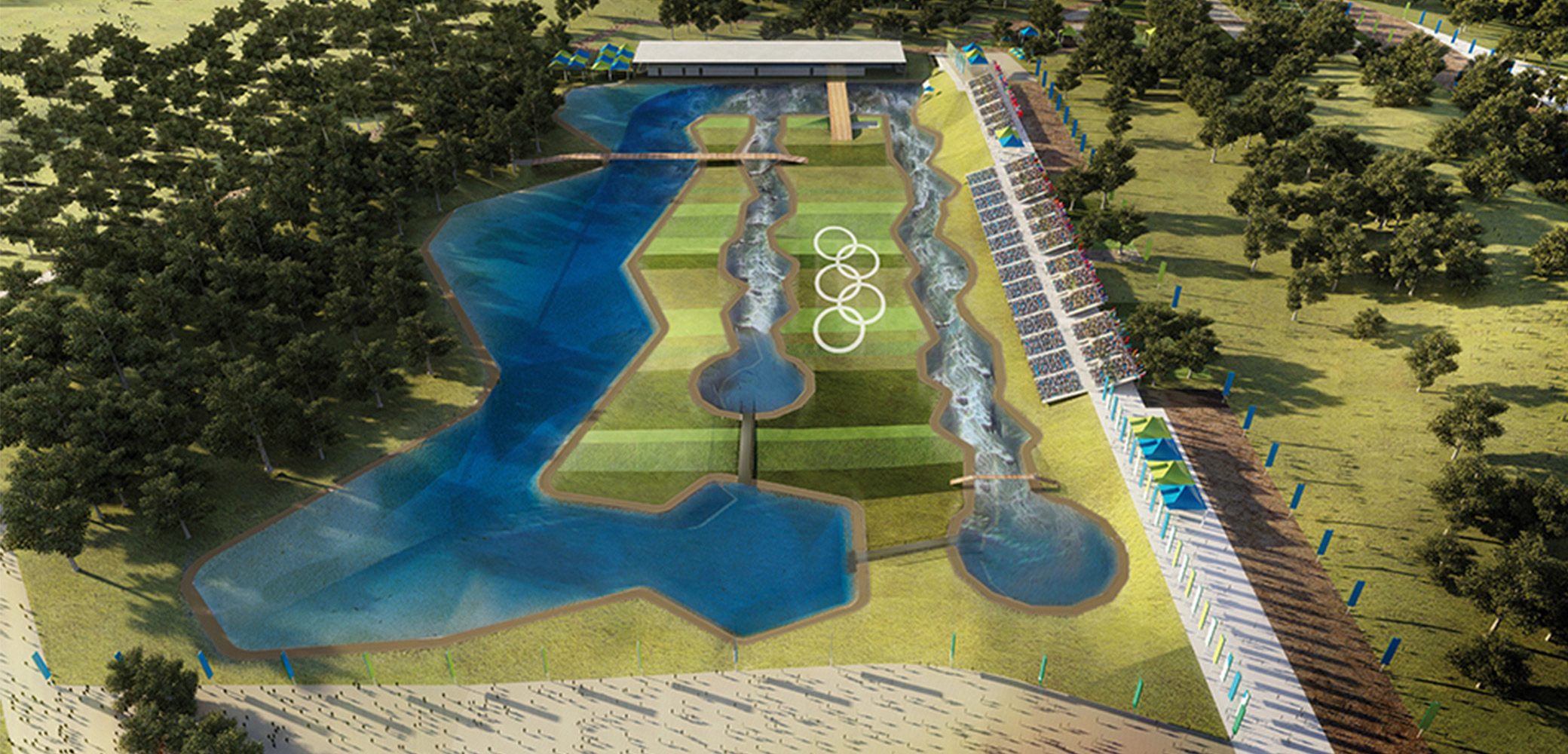
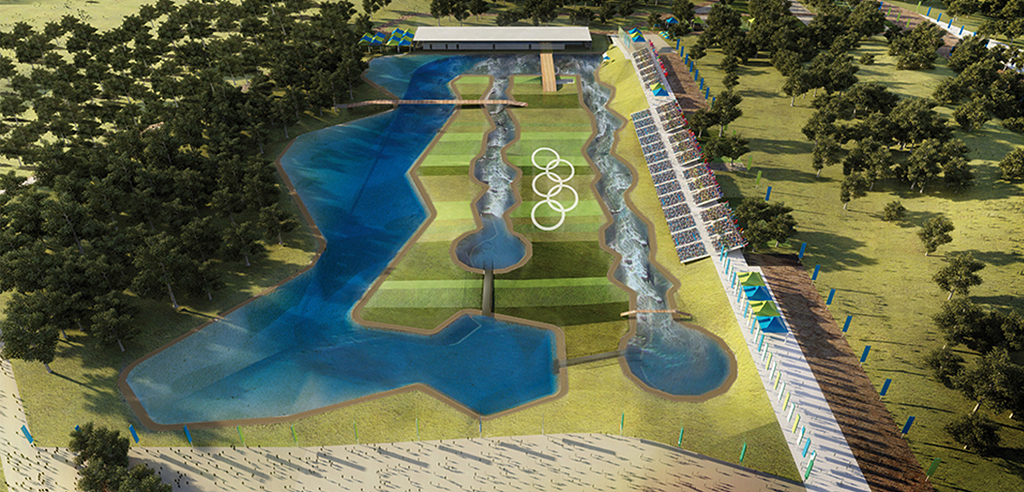
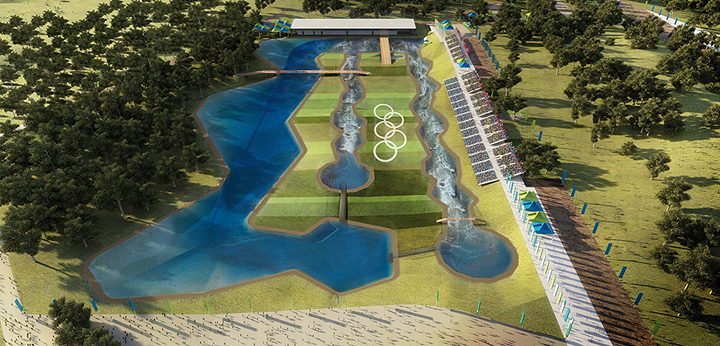
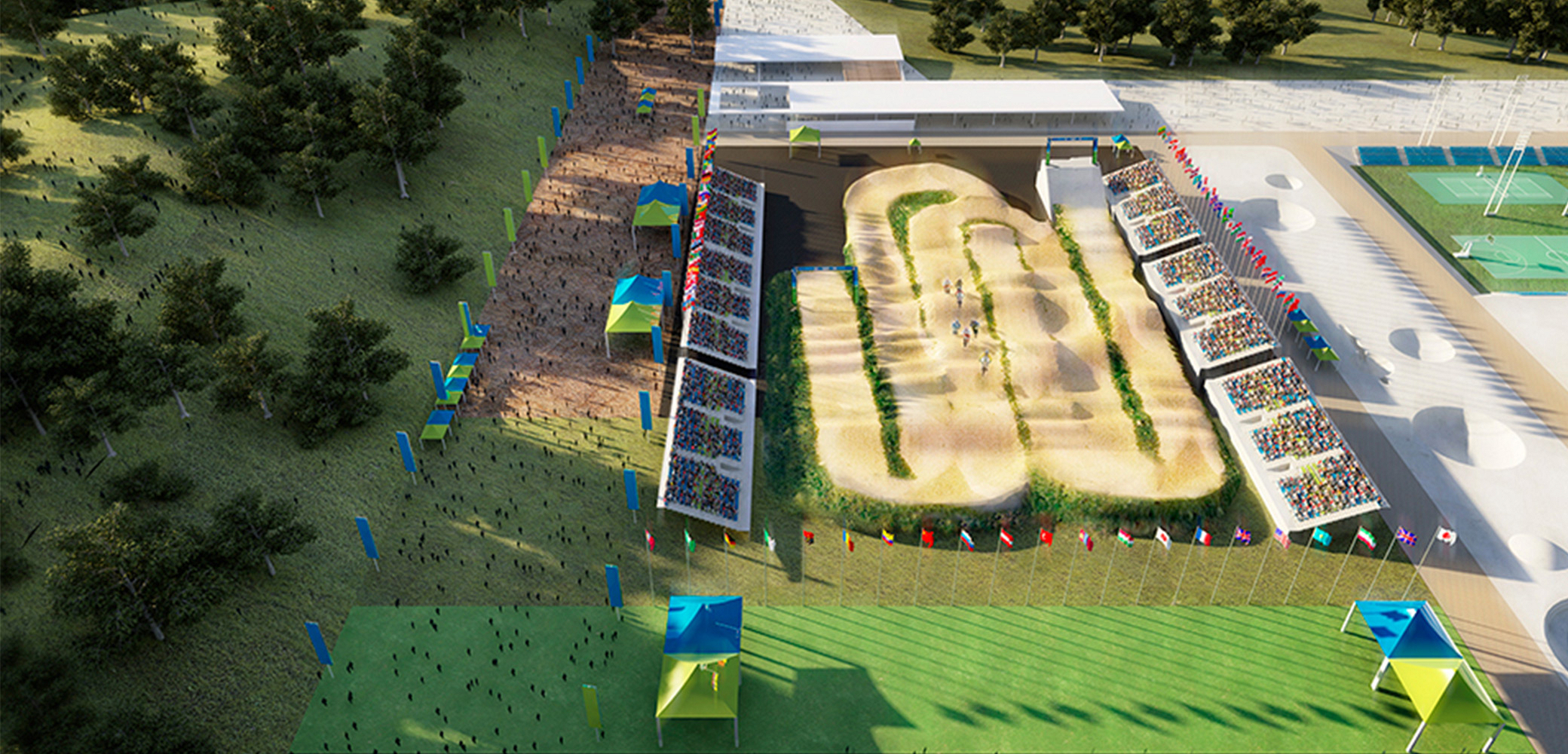
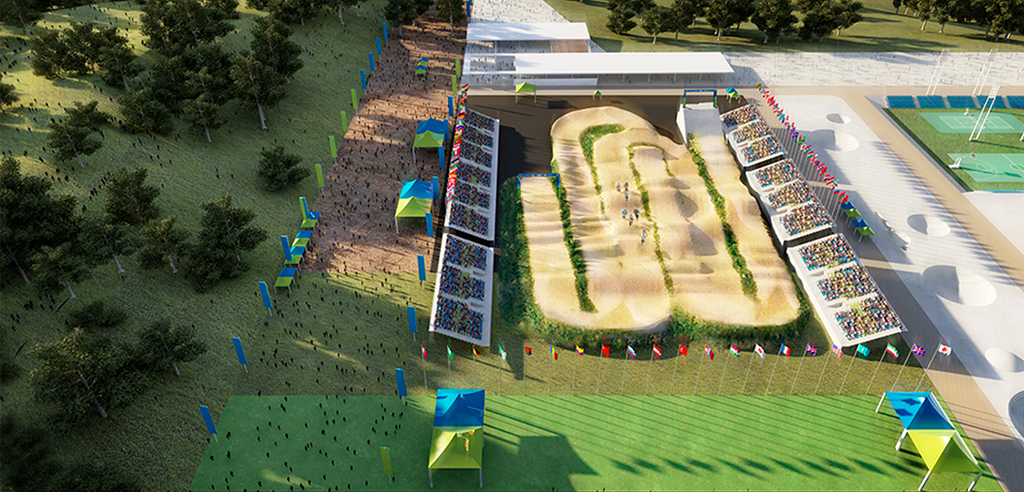
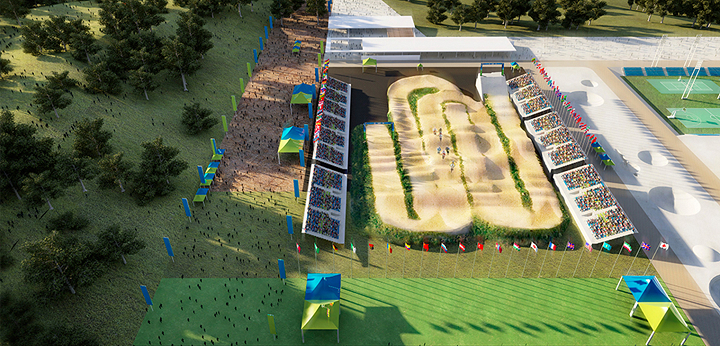
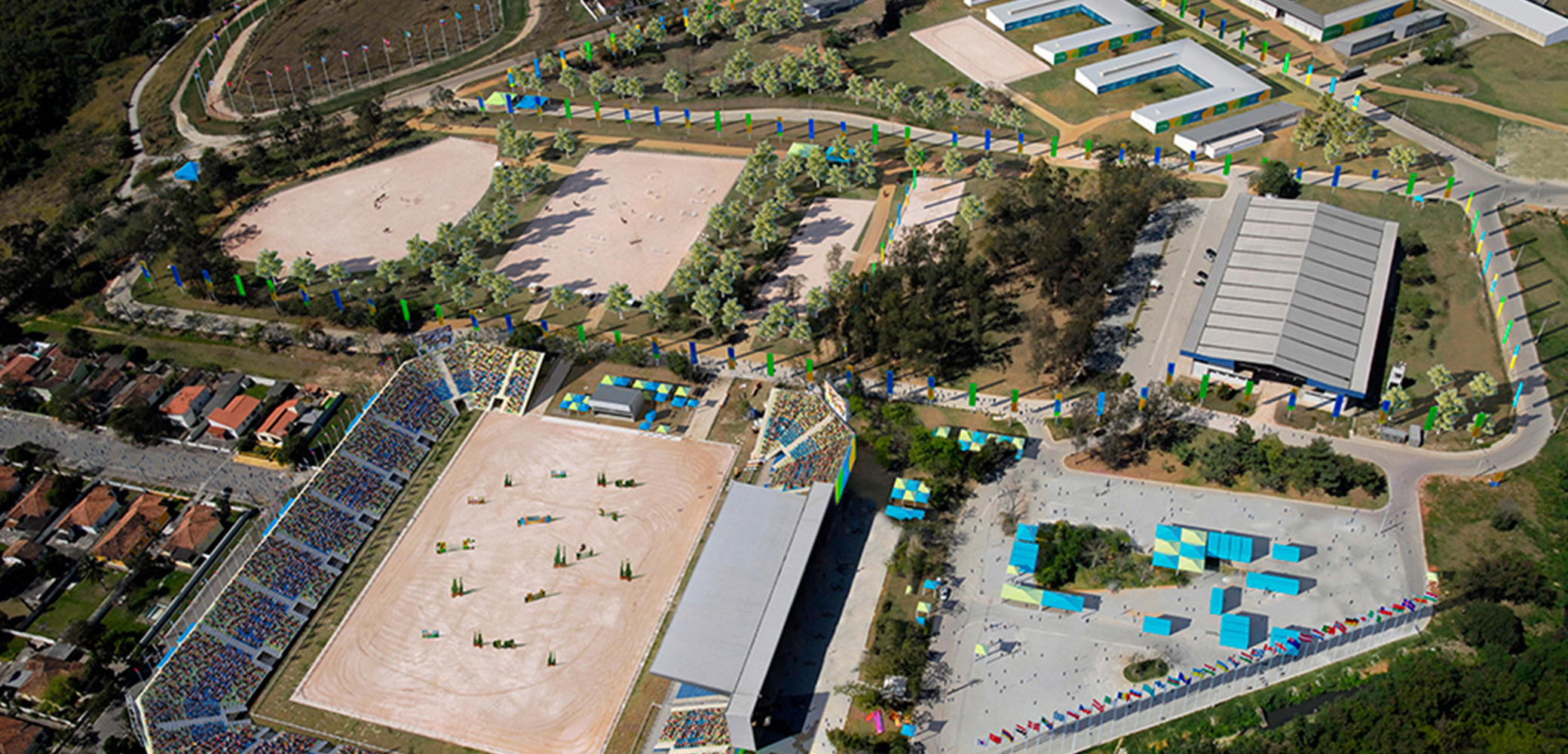
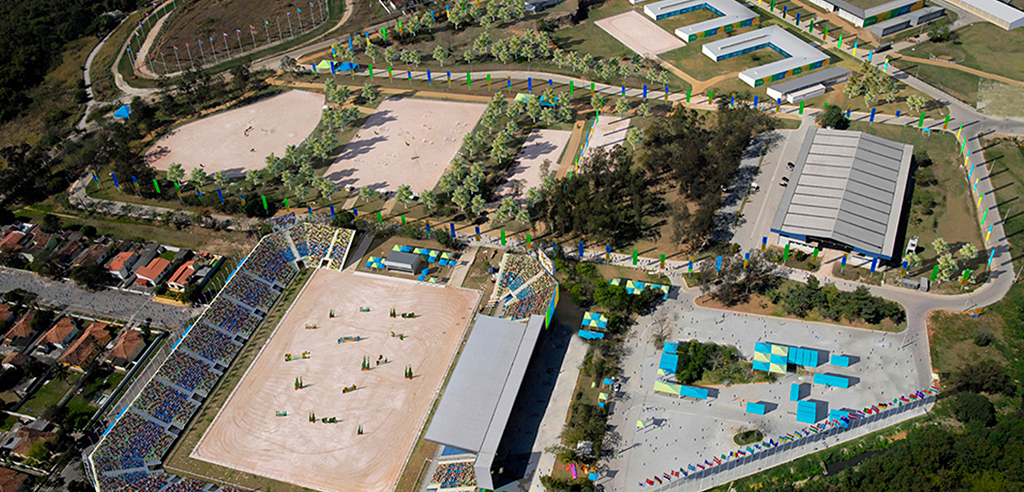
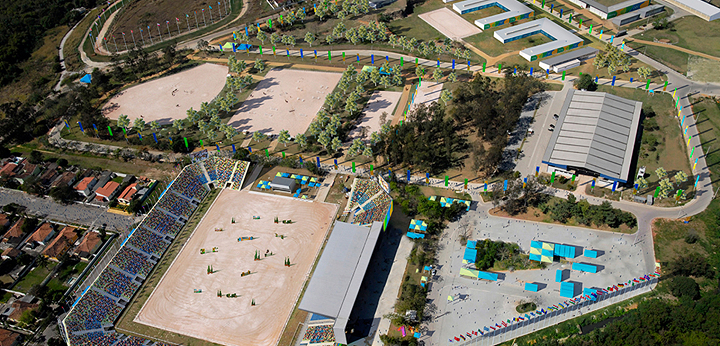
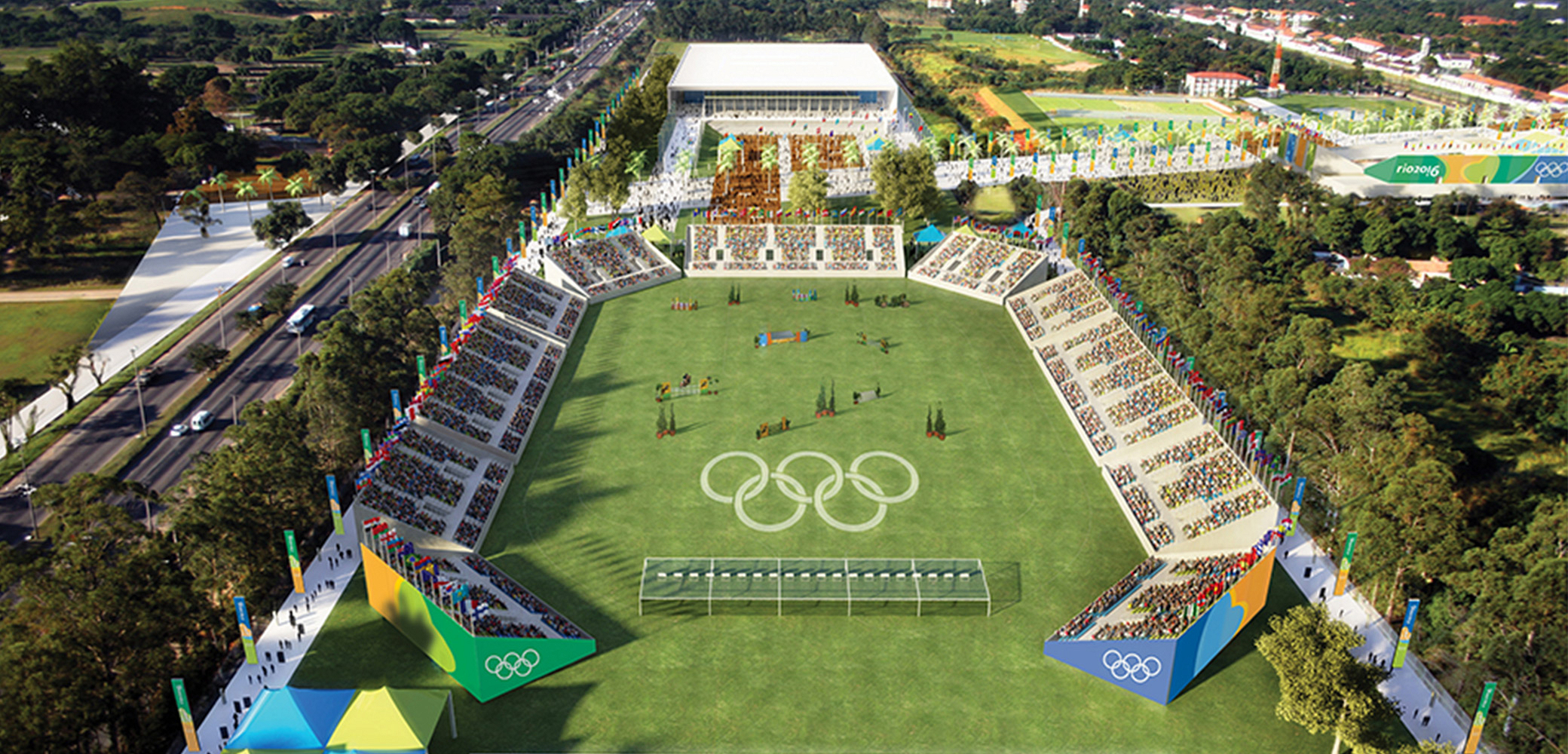
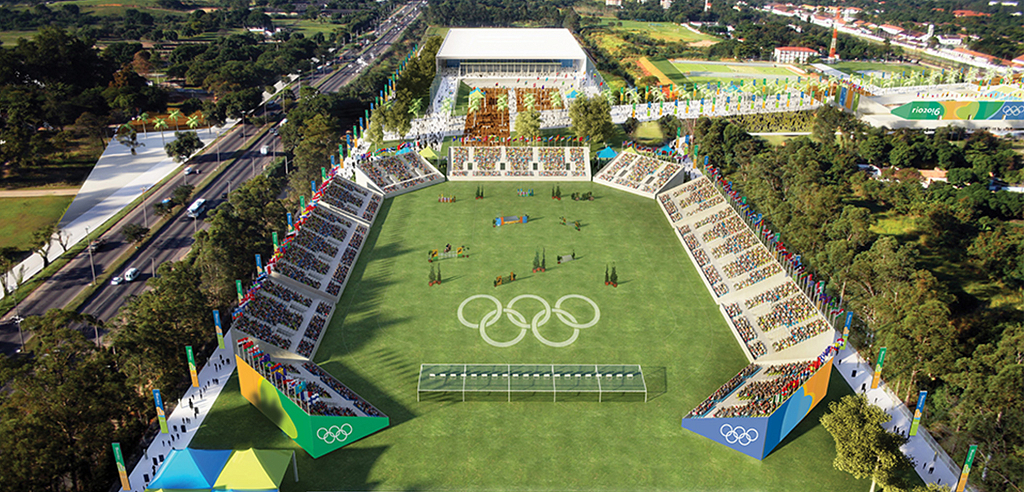
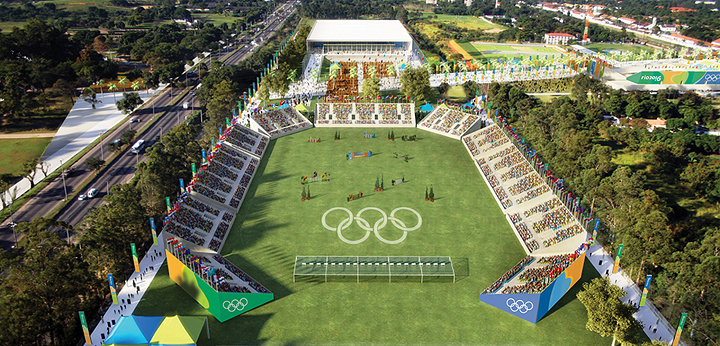
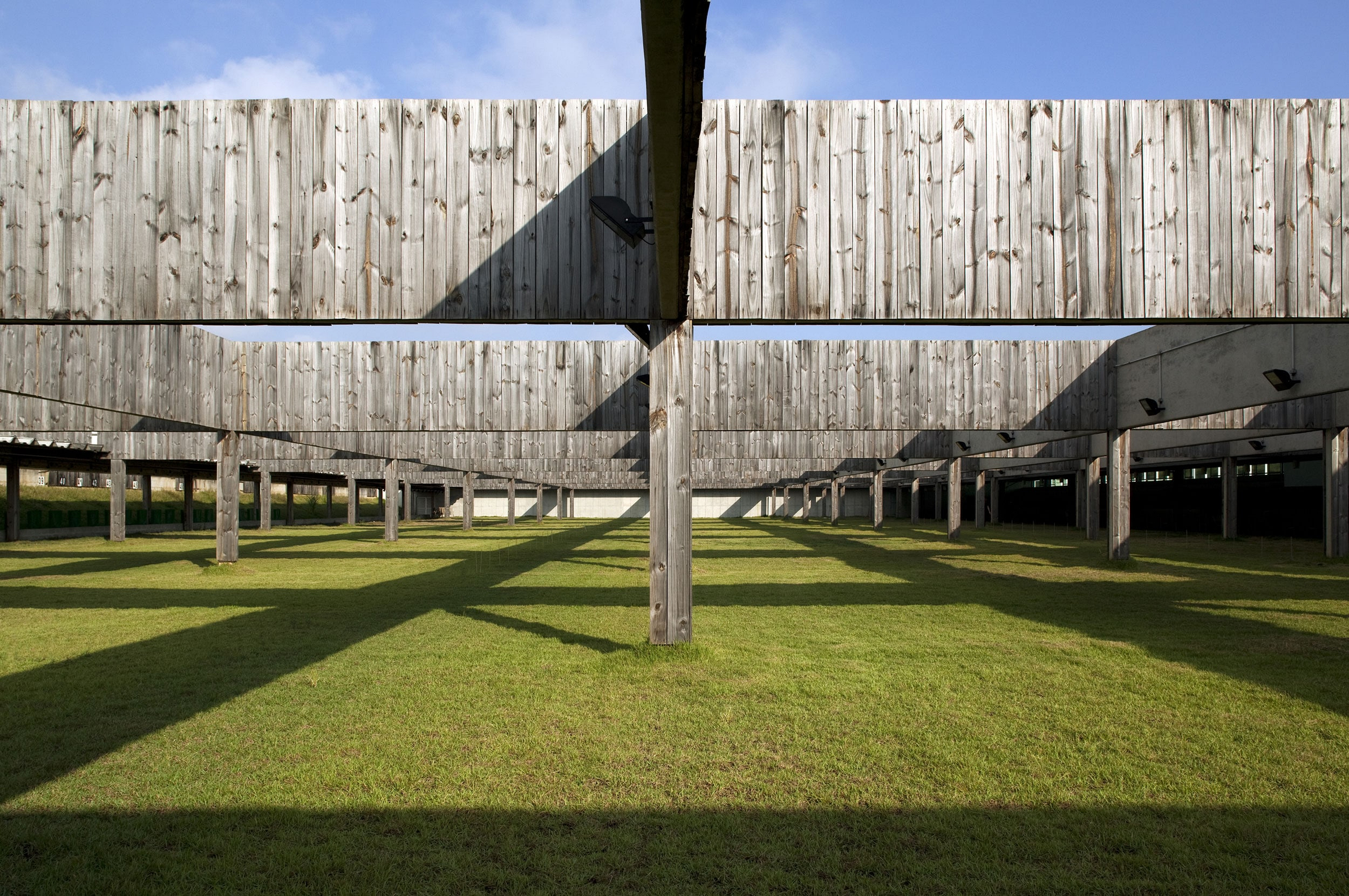
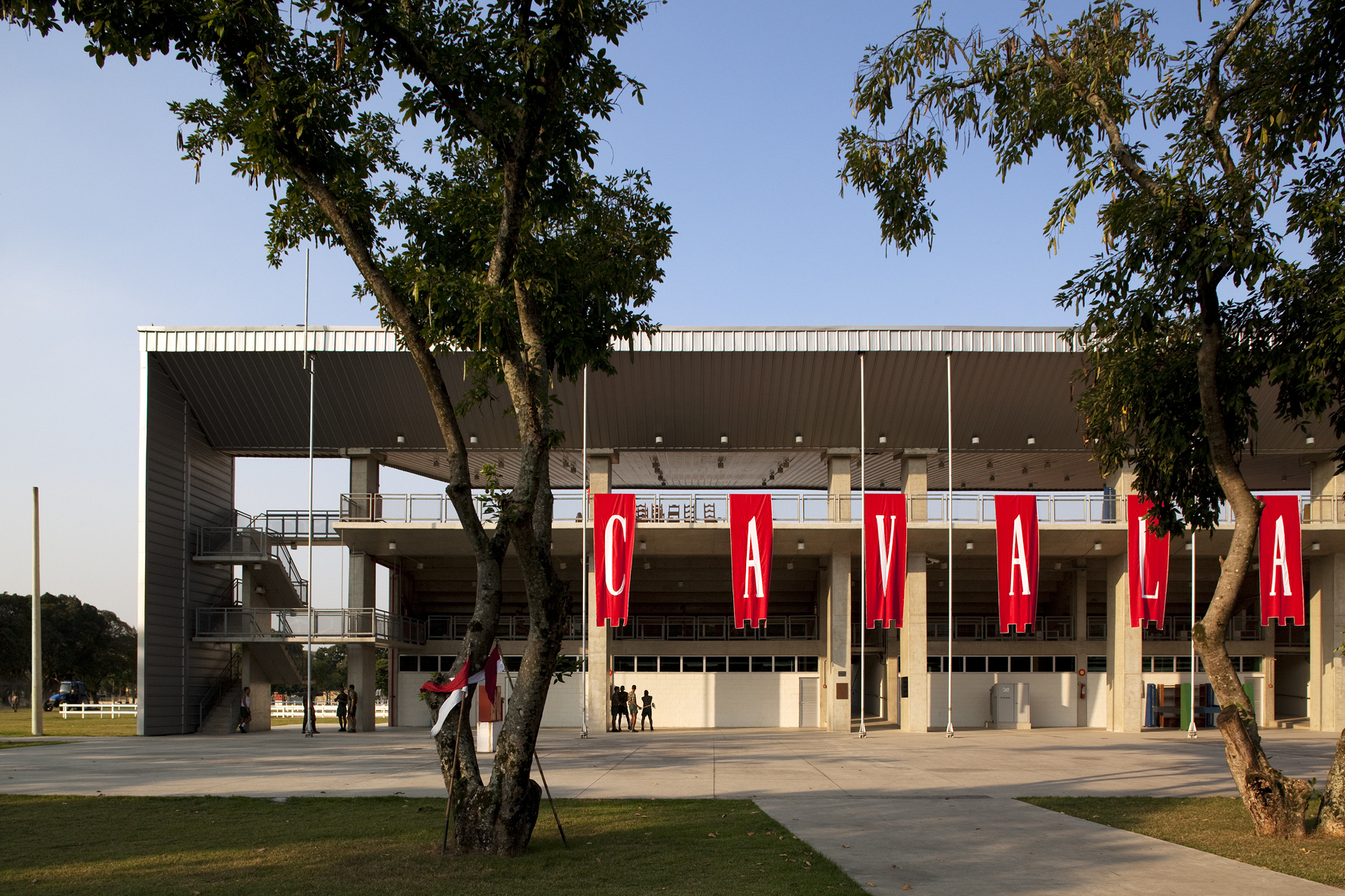
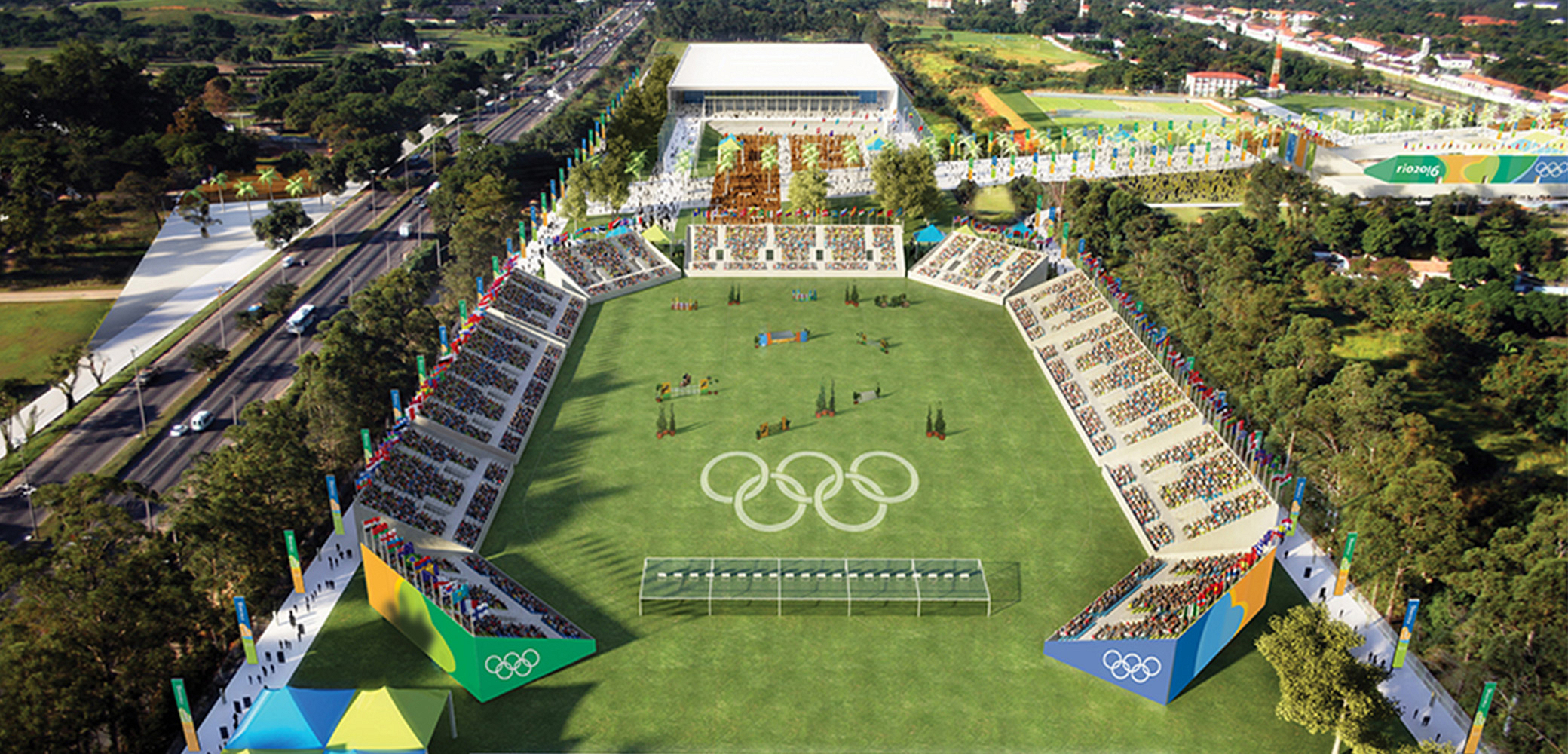
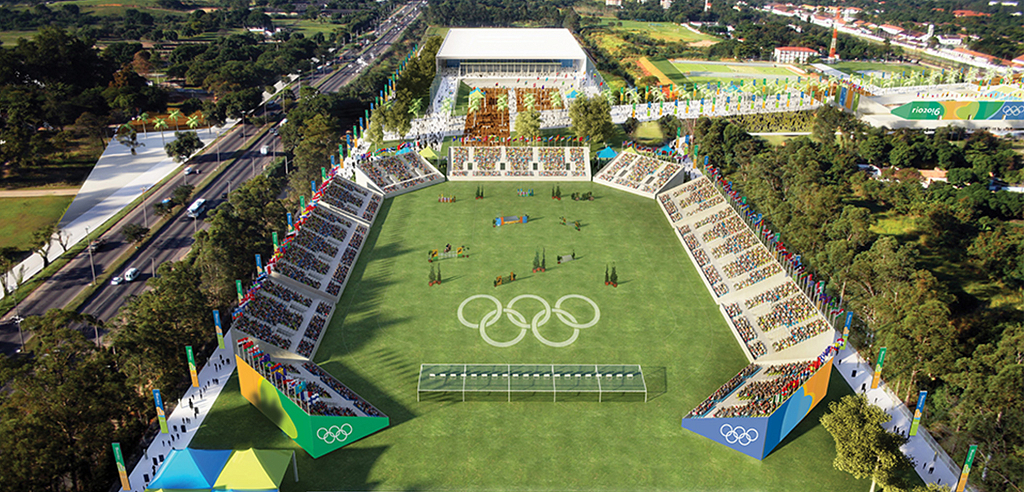
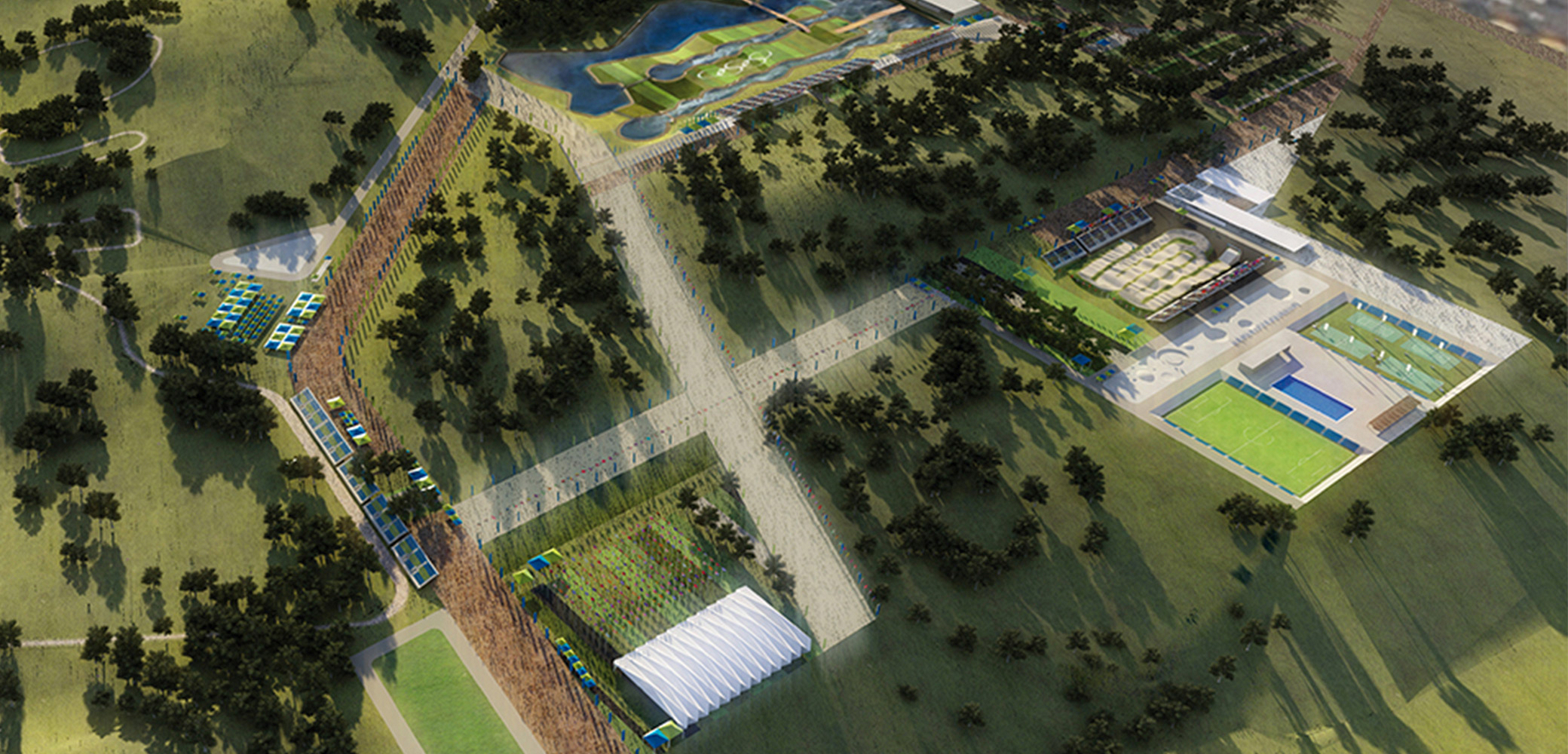
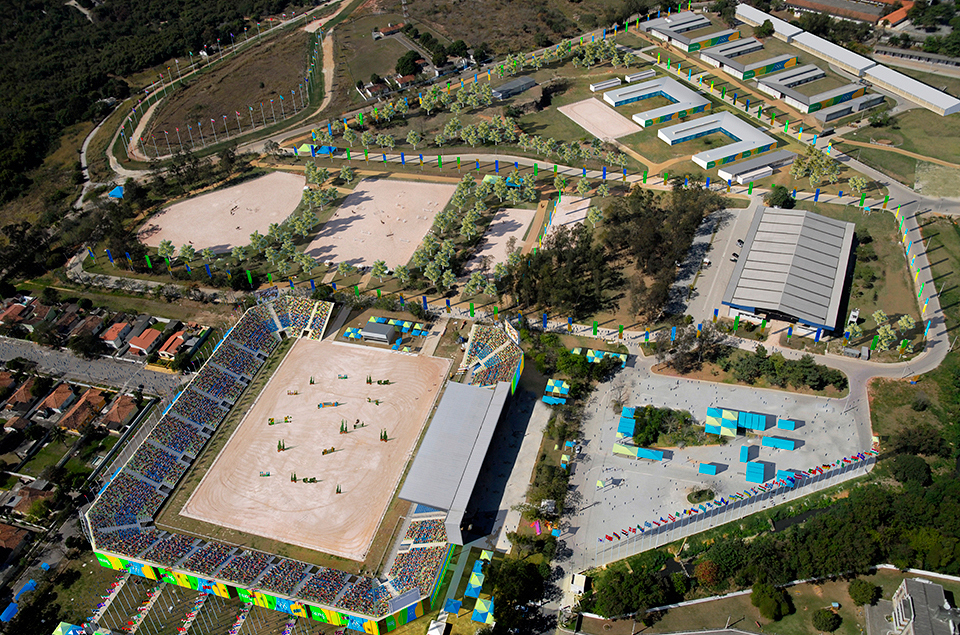
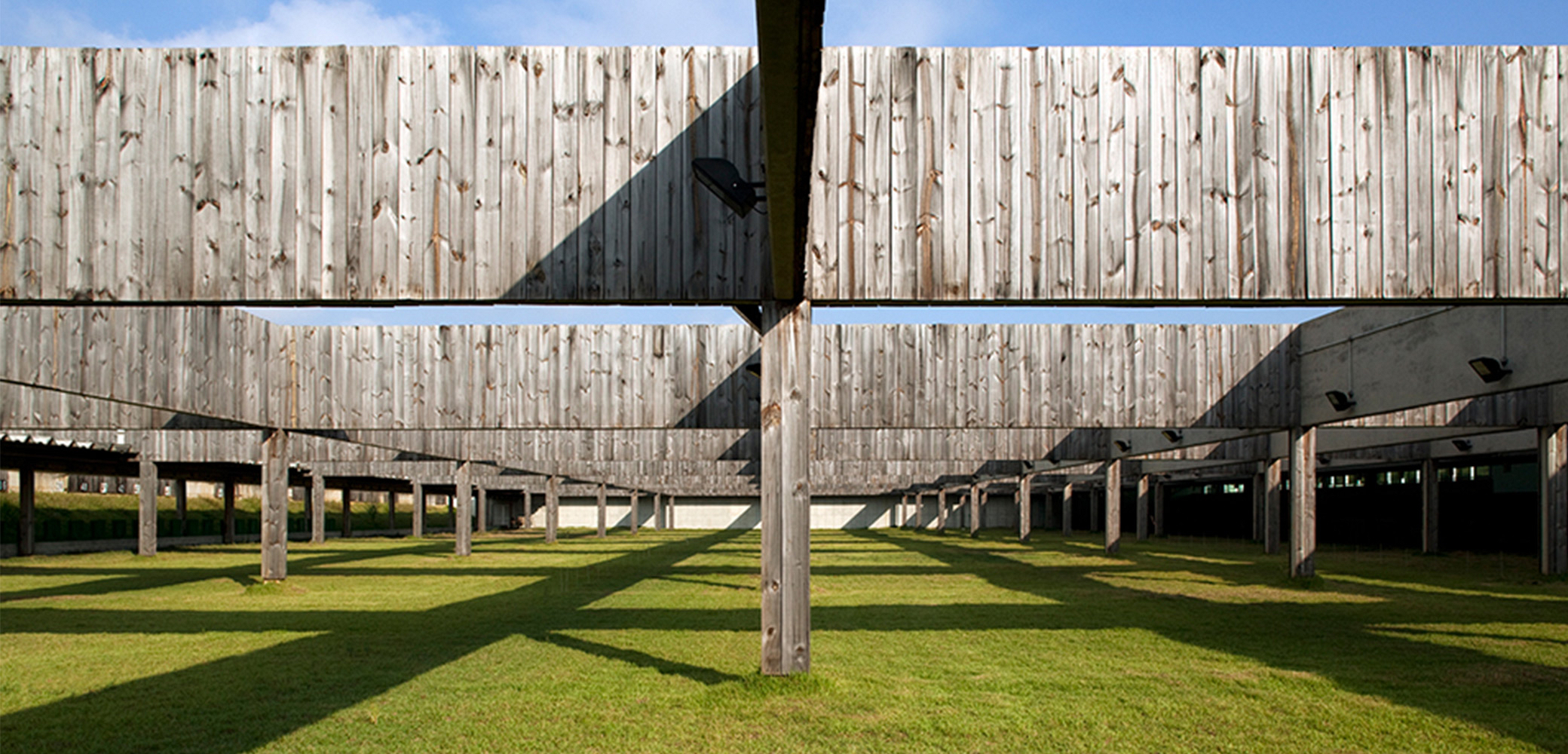
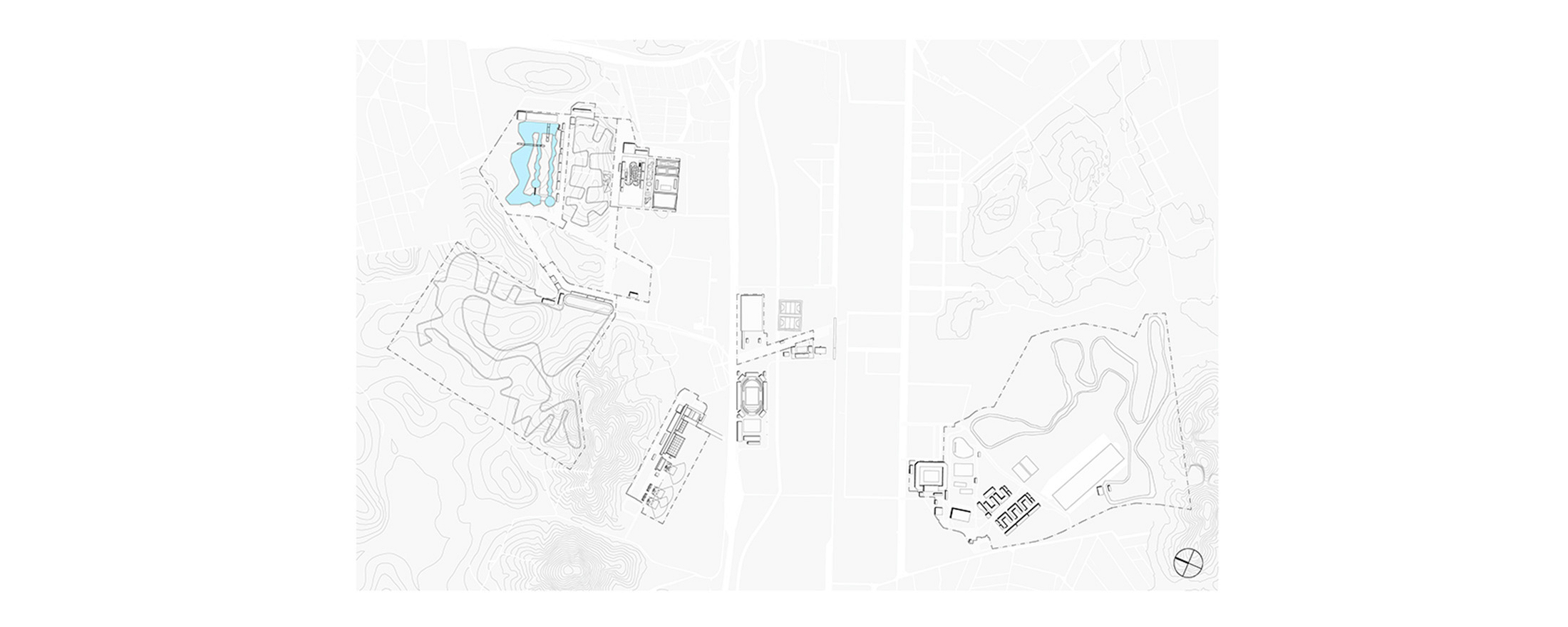
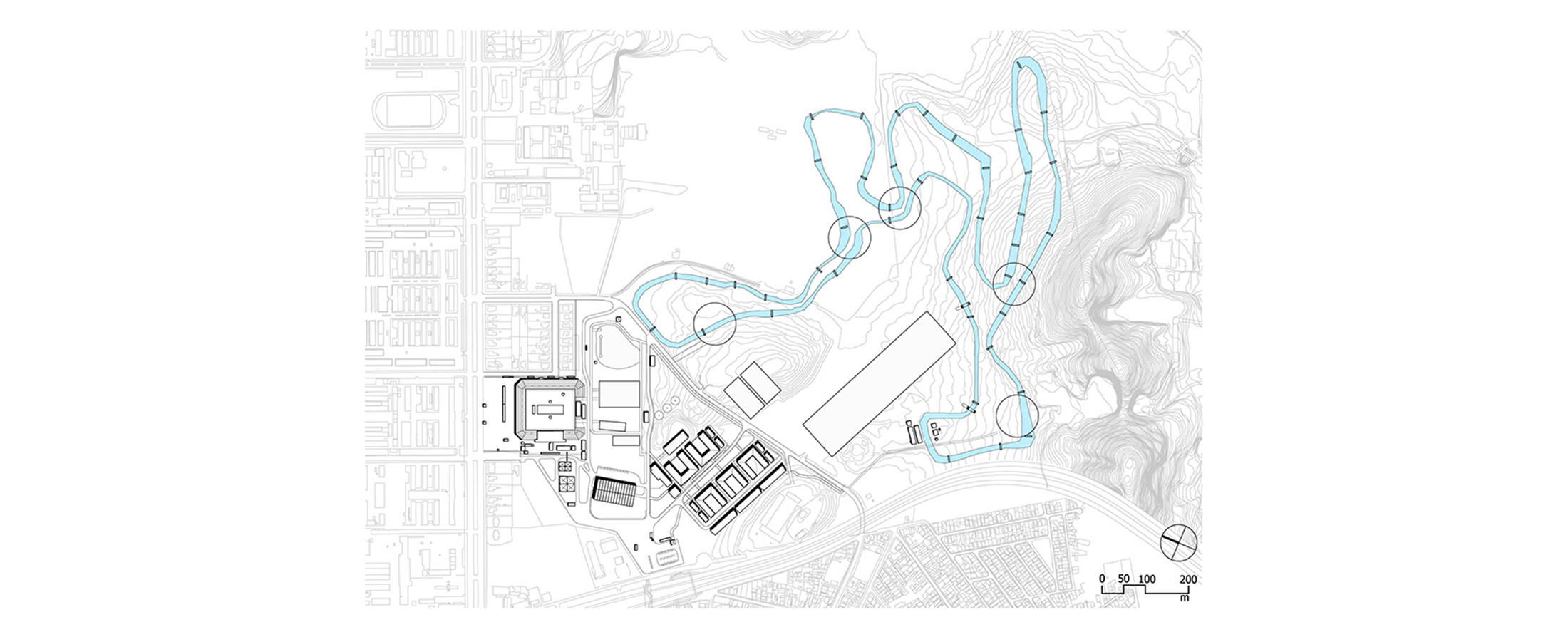
In Deodoro, we were responsible for the design of the X-Park (XPR), a Radical Sports Park comprising the Olympic BMX Center (BMX), the Olympic Whitewater Stadium for Canoe/Kayak Slalom (CAN), and the Olympic Mountain Bike Park (MBK). The National Sports Shooting Center (NSC), the National Equestrian Center (NEC), and the National Center of Modern Pentathlon (MNP)—all previously designed by us for the Rio 2007 Pan-American Games in accordance with Olympic standards—required only adjustments and complementary interventions, including the design of a new Fencing facility, the Deodoro Arena (MNP), as well as several temporary structures.
The X-Park (XPR) represents a new attraction within the Deodoro Sports Complex (DSC), coupled with a new sports club intended to meet the demands of the surrounding suburban communities of Bangu, Realengo, and Vila Militar. Located to the rear of the National Sports Shooting Center, the X-Park was conceived in direct response to the site’s hilly topography and existing vegetation, allowing the project to merge seamlessly with the local natural landscape.
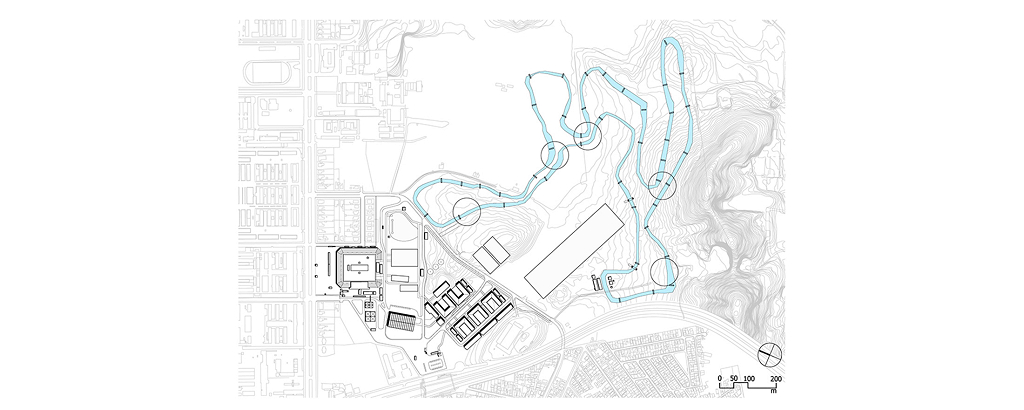
A sequence of hills and valleys determined the spatial organization of the X-Park complex, whose facilities are interconnected by landscaped paths designed in harmony with their surroundings. The Mountain Bike (MBK) circuit was mapped according to the land’s contour lines and existing woodland, with its route enhanced through the planting of local and exotic species. The Canoe/Kayak Slalom Center (CAN) is similarly embedded between a series of hills, with its whitewater course integrated into an artificial lake. The BMX Center (BMX) features part of its grandstands embedded into the slopes of an expanded excavation, minimizing the impact of permanent construction, while complementary temporary structures are placed directly on the terrain.
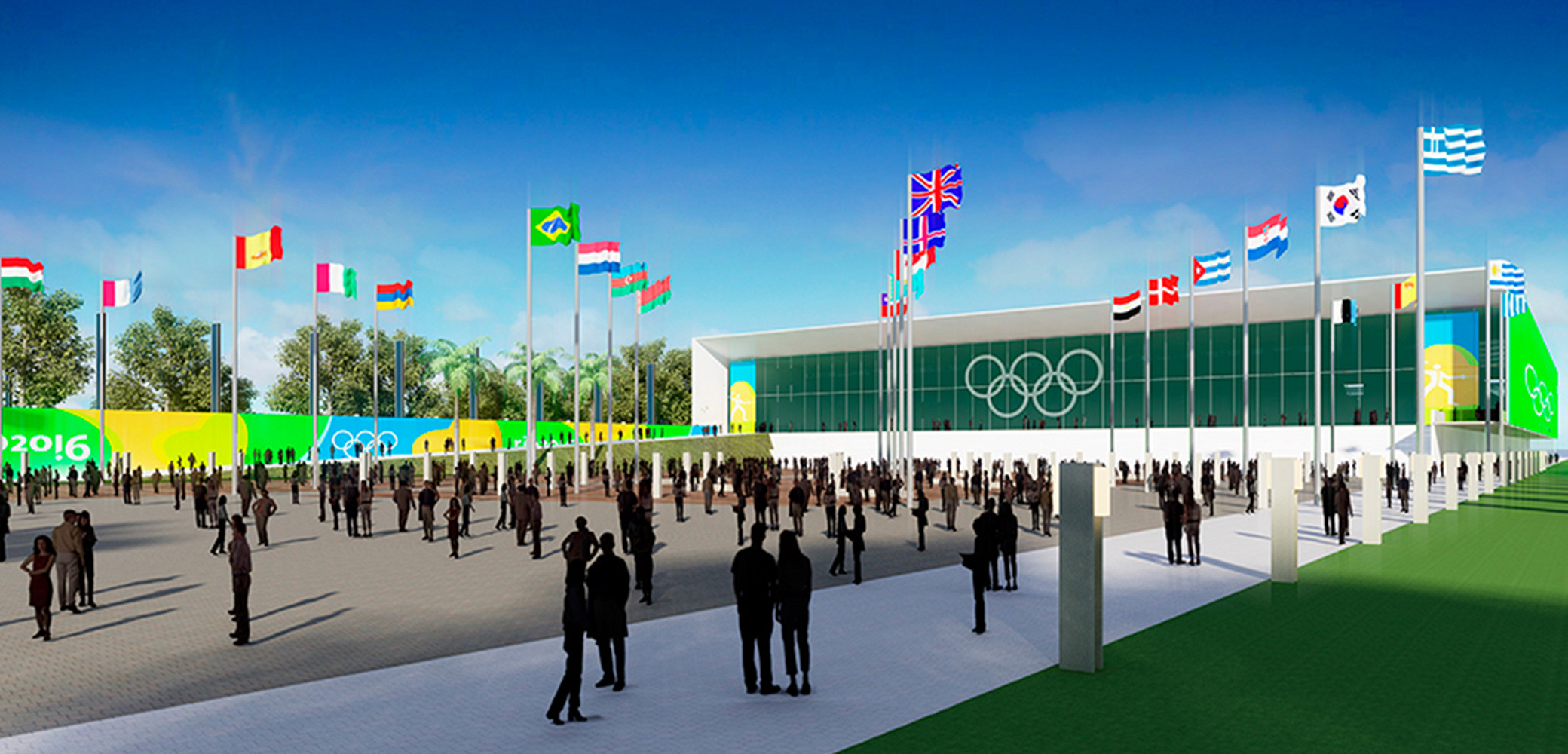
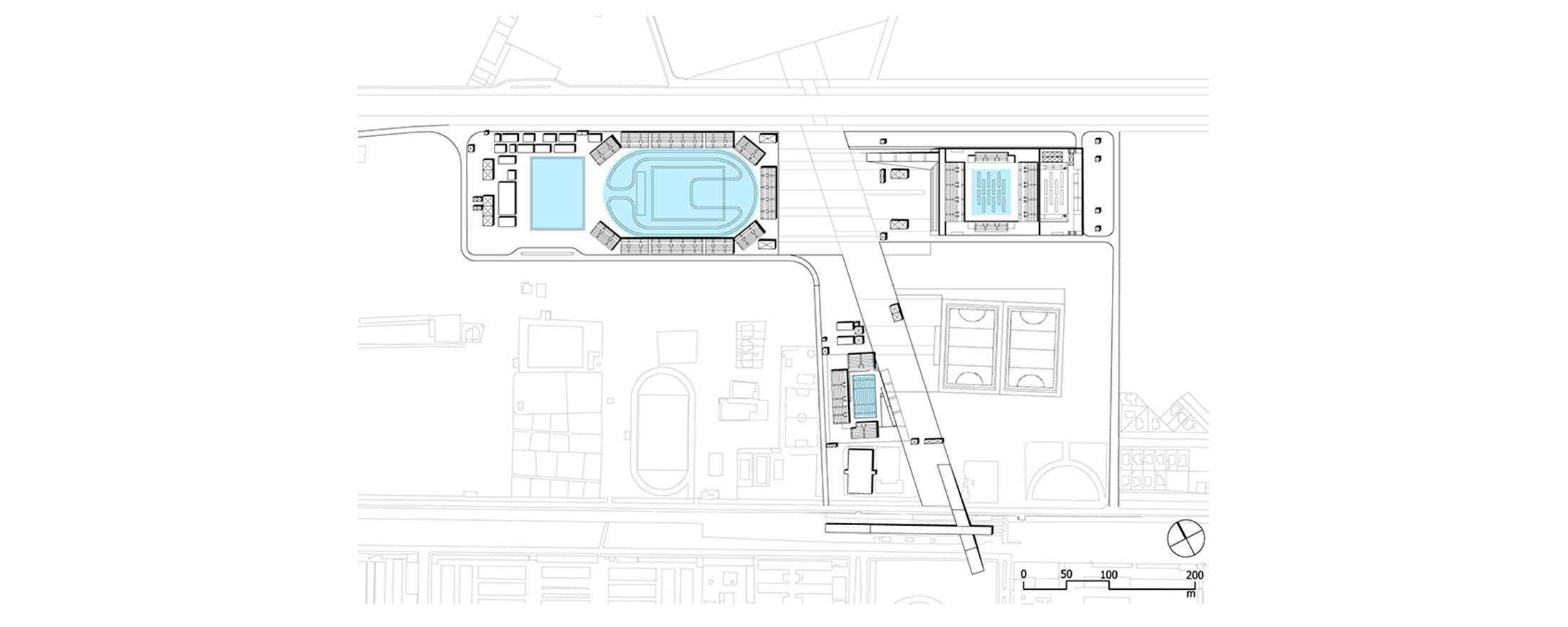
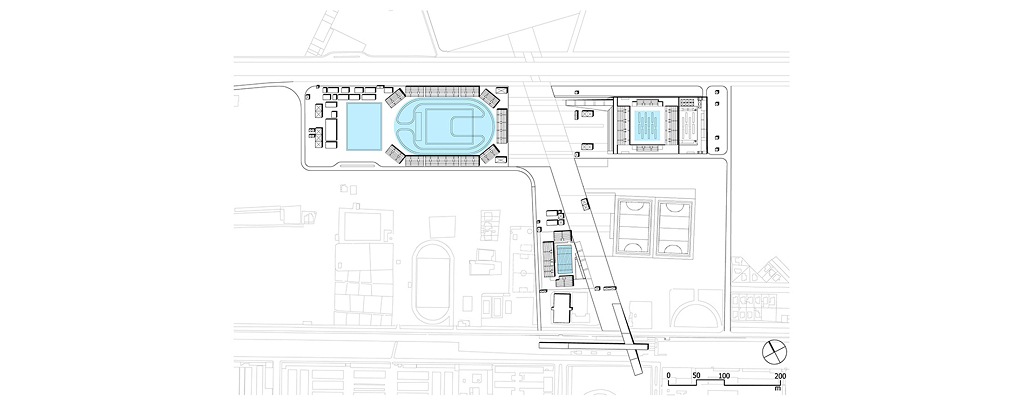
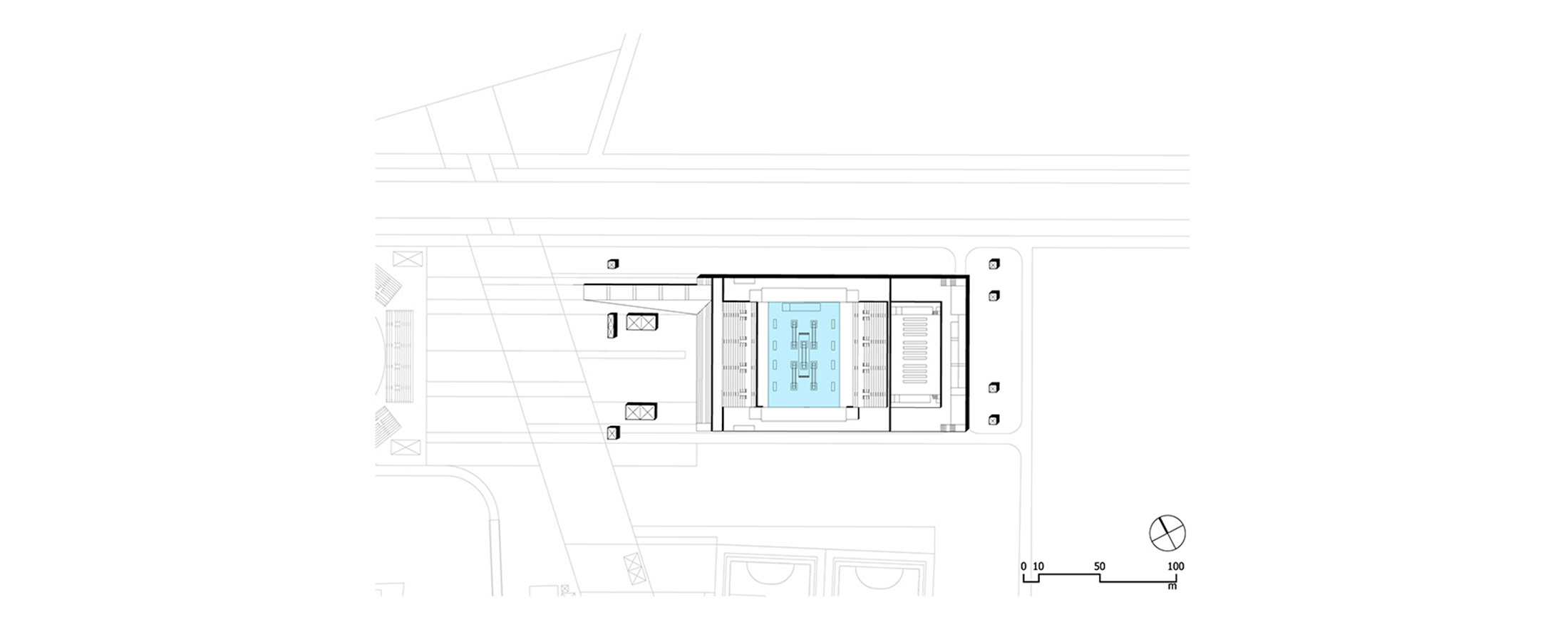
The X-Park is connected to the National Sports Shooting Center (NSC) by a continuous pedestrian path that crosses beneath Avenida Brasil and extends toward the boulevard of the National Center of Modern Pentathlon (MNP). The Deodoro Arena (MNP) hosted the Fencing competitions during the Games and was designed to remain as a multi-purpose gymnasium in the post-Games period, integrated with the Military facilities. Its architectural design follows the same language and construction principles adopted in our projects for the Deodoro Sports Complex developed for the 2007 Pan-American Games. Other facilities, such as grandstands and tents, are temporary, while the existing swimming pool and the new equestrian field remain as part of the Training Center legacy.
The Deodoro Sports Complex was originally designed for the Rio 2007 Pan-American Games with the foresight that a similar competition program could be applied to future Olympic Games (2016). The cluster includes facilities for Shooting, Equestrian, Archery, Hockey, and Modern Pentathlon, many of which remain as permanent training venues for major regional, national, and international competitions. As a result, the NSC, the NEC, and the swimming pool of the MNP already comply with international competition standards, requiring only minor adjustments and enhancements.
The cluster already stands as an important legacy, having successfully stimulated renewal and development along this significant growth vector of the city. The project addresses the complex conditions of a unique suburban context, where a planned military neighborhood, a high-density informal settlement, an industrial area, and an extensive natural landscape coexist. With its new attractions and infrastructure improvements, the Deodoro Sports Complex is set to become a formidable global legacy for high-performance sports, encouraging public use while holding strong potential to catalyze the urban revitalization of a large and significant suburban area of the city.
Project: Rio 2016 Bid
Conceptual Studies for the Rio 2016 Bid
Location: Rio de Janeiro, RJ, Brazil
Year: 2008–2009
Architecture: Bruno Campos, Marcelo Fontes and Sílvio Todeschi (authors), Patrícia Bueno, Leonardo Rodrigues, Mateus Hermeto, Carolina Eboli and Sean Mc Neary (team)
Landscape Architecture: Carlos Teixeira
Credits: Rio 2016 / BCMF Arquitetos
Client: Rio 2016 Bid Committee
Management and General Coordination: Rio 2016 Bid Committee / Alexandre Techima (Infrastructure Director), Elly Resende (General Manager), Ângela Ferreira (Architectural Planning Manager) and Rodrigo Garcia (Operations Planning Manager)
International Consultant: EKS / John Baker
Operational Masterplans and Temporary Facility Projects: (Overlay) EKS / John Baker and Rio 2016 Team (Ângela Ferreira, Ana Paula Loreto, Bárbara Fernandes, Flavia São Thiago, Izabela Hasek, Miguel Ciavarella and Patrícia Dias)
Graphic Production: (BCMF Coordination)
Rendering: Casa Digital (Felipe Coutinho and team)
Final Artwork: Matiz (Fernando Coutinho and team)
3D Models: (SketchUp) Team B – Fernando Pacheco do Nascimento and Leandro do Santos Magalhães and team (Fernanda Albert Saliba, Francielle Evelyn Mendes Gomes and Luisa Soares da Cunha Guimarães)
Infographics: (Rio 2016 Coordination) André Maya Monteiro, Luiza Kramer and Daniel Bokelman
Models: Adhemir Fogassa Maquetes
Status: Built